Qervan Exchange

Qervan Exchange Inc. · Digital asset venue

The innovation, and the opportunity, in digital asset investing

Since El Salvador legalised Bitcoin through its Bitcoin Law, the global cryptocurrency market has expanded faster than the institutions built to serve it. Qervan Exchange Inc. was designed for that seam — a venue that treats custody, registration and uptime as the product itself.

24/7 Real-time security monitoring, a dedicated service desk and open market access. There is no closing bell in a market that never sleeps.
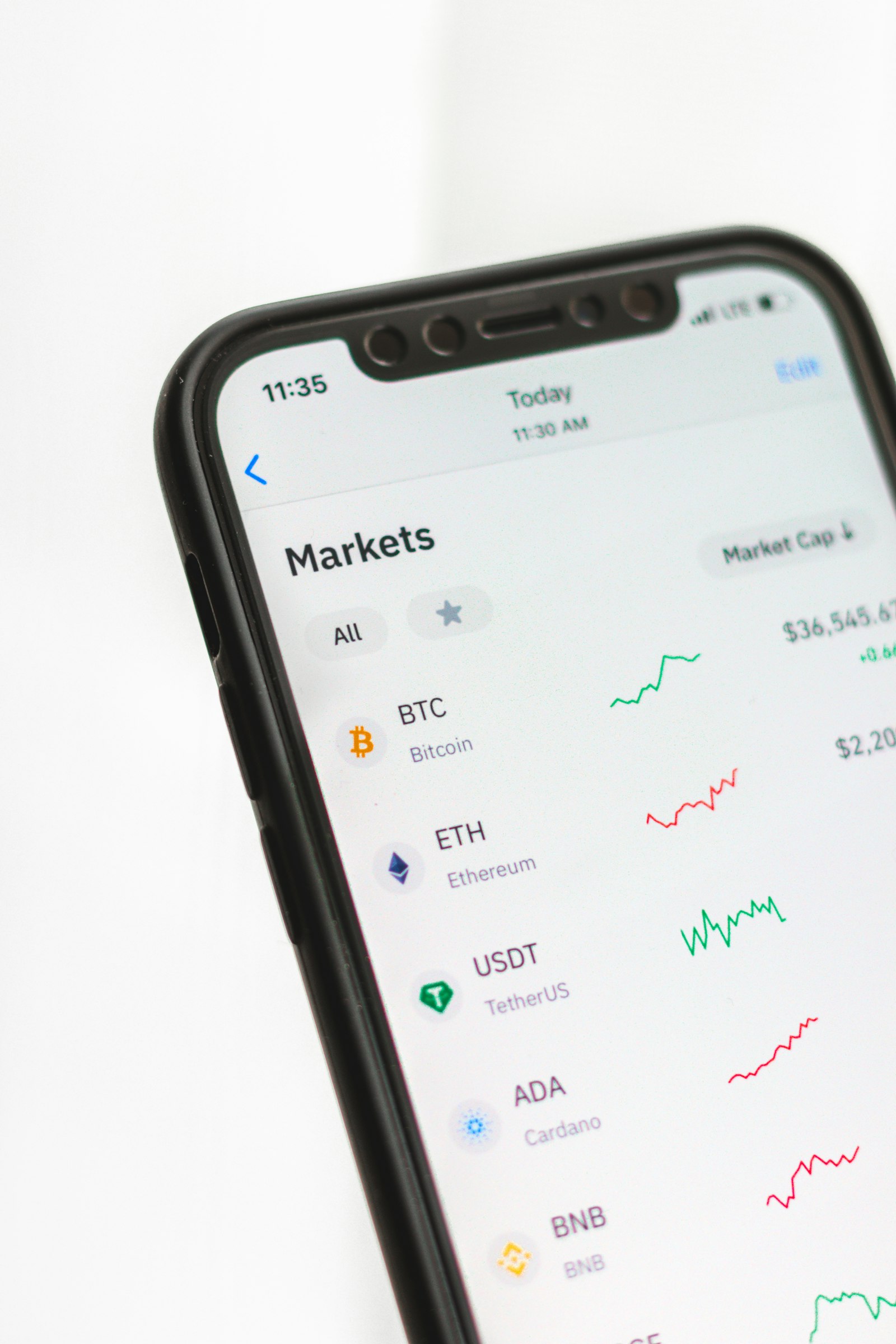
Smartphone displaying a cryptocurrency markets watchlist listing BTC, ETH, USDT, ADA and BNB with small green and red price sparklines

Access is the first product. A venue is only as useful as the reach it gives a participant.

Digital asset markets list hundreds of instruments across dozens of venues. Consolidating that surface into one account, one order book and one set of protections is the problem an exchange is supposed to solve.

Chapter 01 · The market

An asset class that grew faster than its infrastructure

El Salvador's decision to legalise Bitcoin through its Bitcoin Law moved digital assets out of a specialist conversation and into a national one. The global cryptocurrency market then developed rapidly, drawing in retail investors who simply wanted access and institutions that needed a counterparty able to satisfy their own internal standards.

That widening exposed a specific shortage — not of trading venues, of which there were many, but of venues that behaved like financial infrastructure. An exchange is never only an order book. It is a custodian, a compliance function, a service desk and a technology platform at once, and the failure of any one ends a customer relationship.

Qervan Exchange Inc. positions itself in that gap. Its five stated advantages are not novel in kind; what is claimed is the standard at which each is delivered. This page works through them, examines what the registrations behind the platform do and do not mean, and closes on where the company says it intends to go next. It is not investment advice and contains no price forecast.

Chapter 02 · Five advantages

Five advantages, taken one at a time

Set beside each other in a marketing sentence these five claims blur together. Separated, each raises a question a user can test: what does this control do, what does it protect against, and what would it look like if it were absent?

  1. Custody

    Robust asset protection

    Security is presented as the platform's first priority rather than a feature bolted on after launch: multi-factor authentication on account access, advanced encryption protocols protecting data in transit and at rest, and 24/7 real-time security monitoring intended to detect and eliminate potential threats before they reach user assets.

  2. Reach

    Global market access

    Qervan Exchange Inc. is registered as a Money Services Business (MSB) in the United States and qualified to provide Security Token Offering (STO) services under the framework of the U.S. Securities and Exchange Commission (SEC), confirming its ability to facilitate the tokenization of stocks. Deep partnerships with leading global trading venues provide comprehensive market coverage for active traders and long-term investors alike.

  3. Guidance

    Institutional-level advisory team

    The advisory bench is described as a team of seasoned financial experts whose experience and market insight are applied as personalised investment guidance — help through volatile conditions, framed around the client's own objectives rather than a single house view. The stated aim is better risk-adjusted outcomes: a goal, not a guarantee, and one that depends on decisions the investor ultimately makes.

  4. Service

    Dedicated customer support

    Support runs through a 24/7 customer service desk and multiple online communication channels, staffed by a team that combines deep domain knowledge with clear communication. In a market with no closing bell, an unanswered question during a fast move is itself a risk event.

  5. Engineering

    High-performance technical architecture

    Advanced enterprise-grade technology, high-capacity server infrastructure and robust encryption algorithms support high-concurrency transactions while maintaining data confidentiality. This is the layer that decides whether the other four survive contact with a busy market: an order book only works if it stays correct while thousands act at once.

Chapter 03 · Asset protection

What "asset protection" actually has to hold

Asset protection on an exchange is a stack of controls that must hold at once, and a stack is only as strong as its weakest layer. Qervan Exchange Inc. describes that stack in four parts: authentication, encryption, wallet segregation with multi-signature approval, and continuous monitoring.

Authentication and encryption

A password alone is a single point of failure: credential stuffing, phishing and password reuse make a stolen credential routine rather than exotic. Multi-factor authentication adds a second, independent proof, so a compromised password is not by itself enough to move funds or change settings. Encryption then has to cover two situations — traffic in flight, which must resist interception, and stored records, keys and logs, which must resist theft of the storage medium itself. An attacker who cannot read traffic in flight will simply target what is sitting still.

Close-up of overlapping United States one-dollar banknotes filling the frame
Custody is the quietly load-bearing part of an exchange. A venue holds client assets on their behalf, which makes the separation of that balance from the operating balance a structural control — not an afterthought.

Segregation, multi-signature and permissions

Cold and hot wallet segregation splits holdings by purpose and exposure. A hot wallet stays connected to service routine withdrawals; a cold wallet stays offline, holding the bulk of assets that need not move today. The amount at immediate risk is therefore deliberately limited to what operations require. Multi-signature approval then removes the single-key failure mode: no individual can release funds alone. Tiered permissions reinforce it, keeping the ability to read client records separate from the ability to move money.

Monitoring that does not sleep

Round-the-clock monitoring closes the loop, detecting and removing threats as they appear rather than reviewing them afterwards. Because digital assets trade continuously and attackers keep no business hours, a monitoring function with an overnight gap has an overnight vulnerability.

Controls described by the platform, and what each one addresses
Control What it addresses Why the layer matters
Multi-factor authentication Stolen or reused credentials A compromised password alone cannot authorise access.
Encryption in transit and at rest Interception and storage theft Protects the live session and the stored record behind it.
Cold and hot wallet segregation Exposure of the whole balance Limits what is reachable at any moment to operating needs.
Multi-signature approval Single-key or insider action No individual can move client funds unilaterally.
Tiered permission levels Excessive staff authority Keeps custody authority apart from support roles.
24/7 security monitoring Threats outside working hours Detection is continuous, like the market.
An honest boundary

Every control above reduces a specific risk; none eliminates risk. Layered security raises the cost of an attack and narrows the window in which one can succeed. It does not make a trading venue a risk-free place to hold assets, and no platform should be described as though it did.

Chapter 04 · Market access

Global access, and the registrations behind it

Global market access bundles two different things at Qervan Exchange Inc.: a regulatory position, which determines what the platform may lawfully do and for whom, and connectivity, which determines what a user can actually trade. Conflating the two is how marketing language becomes misleading.

What US MSB registration is

A Money Services Business is a category of U.S. financial institution. A firm that transmits money or deals in certain monetary instruments must register as an MSB with the Financial Crimes Enforcement Network, a bureau of the U.S. Department of the Treasury, under the Bank Secrecy Act. That brings it inside the federal anti-money-laundering perimeter, with a risk-based AML programme and recordkeeping and reporting duties — the baseline any bank or institutional counterparty looks for.

What MSB registration does not mean

The limits matter just as much, because "registered in the United States" is easily stretched past what it supports. MSB registration is not a securities licence, not an endorsement by the U.S. government, and not a global licence. It does not remove the need for authorisation elsewhere. Read correctly, it is one credential inside one framework — meaningful, and bounded.

MSB registration: what it establishes, and what it does not
It establishes It does not establish
Registration with FinCEN under U.S. federal AML rules. A licence to operate as a securities exchange everywhere.
An AML programme with reporting duties. Approval or a rating by the U.S. government.
A place inside a supervised compliance perimeter. A substitute for state or other countries' licensing.
A prerequisite banking partners require. A guarantee of solvency, security or performance.

Security Token Offering services under the SEC framework

Qervan Exchange Inc. is qualified to provide Security Token Offering (STO) services under the framework of the U.S. Securities and Exchange Commission, confirming its ability to facilitate the tokenization of stocks. A security token is a digital token that is itself a security — it represents an ownership interest, a debt claim or a share in an underlying asset — and so falls under securities law rather than beside it. In the United States such an offering must fit inside the framework the SEC administers, through registration or an available exemption. A token does not stop being a security because it is issued on a blockchain, which is why treating tokenized equity as a securities activity is the point.

Connectivity, and why both halves belong together

Through deep partnerships with leading global trading venues, the platform describes comprehensive market coverage — enough breadth for an active trader to move between instruments without leaving the account, and enough depth for a long-term investor to build a position. Coverage is a claim about reach, not outcomes. A registration without connectivity produces a compliant platform nobody can use; connectivity without one produces a platform that works until it is asked who authorised it to operate. The group's wider compliance direction is set out in Qervan's compliance and security infrastructure and Qervan Global's regulatory-compliance work.
Chapter 05 · Technology

What high-concurrency matching actually demands

High-performance architecture quietly underwrites the other four advantages: a custody model is only as good as the system that enforces it. Qervan Exchange Inc. describes enterprise-grade technology, high-capacity server infrastructure and robust encryption algorithms supporting high-concurrency transactions while maintaining data confidentiality.

The matching engine is the centre of gravity

At the centre of any exchange sits a matching engine. It holds an order book per instrument and matches incoming orders by price-time priority: the best price wins, and at the same price the earliest order wins. That rule sounds simple and is unforgiving, because it must be applied identically for every participant, in the same order, every time. The fairness of a venue is really the determinism of its matching logic.

High concurrency is what makes the naive implementation fail. When thousands of participants submit, amend and cancel orders at once, a design that lets two threads touch the same order book will eventually produce a torn state: a fill that never happened, a cancelled order that executes, a position that no longer reconciles. The standard answer is to make each order book single-writer — one authoritative sequence of changes per instrument — and let everything else scale around that spine.

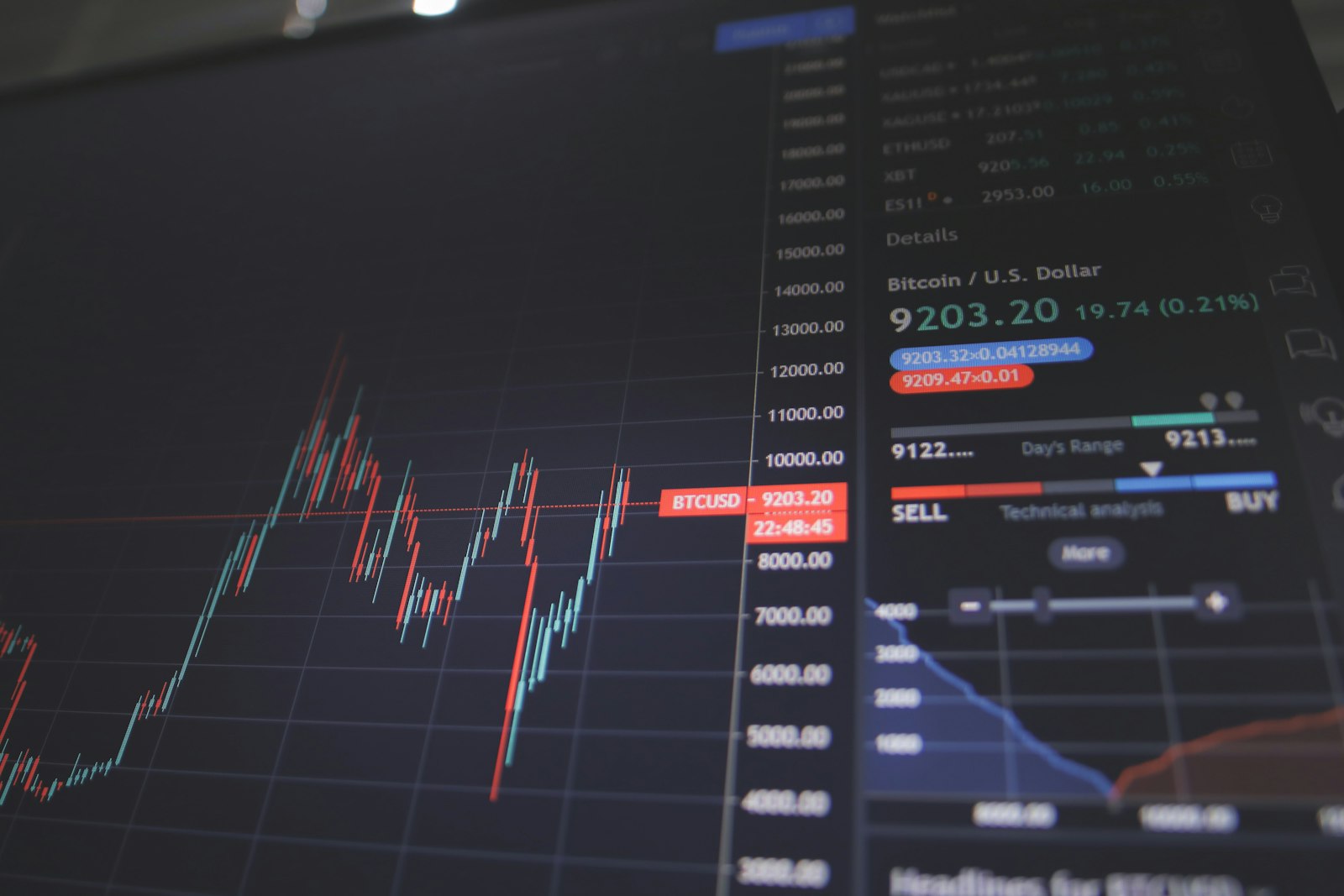
Trading platform interface showing a BTC/USD candlestick chart beside an order book with bid and ask rows and a buy-sell control
Every number on a screen like this is the visible tip of a sequence of state changes that had to be applied in the correct order. The chart is the display; the ordering is the product.

What the problem demands of the infrastructure

  • In-memory order books. Matching latency is dominated by how fast the book can be read and rewritten, which pushes working state into memory rather than disk.
  • A sequenced, replayable event log. Every accepted order, amendment and cancellation is appended in order, so the system can be rebuilt after a failure instead of reconstructed by guesswork.
  • Risk checks before acceptance. Balance and exposure checks run ahead of matching, so an order that cannot be honoured is rejected rather than filled and unwound.
  • Horizontal partitioning and failover. Capacity is added by splitting instruments across independent books, and a standby takes over the sequence without losing or duplicating an event.
  • Backpressure and reconciliation. Under extreme load a venue must degrade predictably rather than accept work it cannot complete, and ledger balances are continuously checked against the trade sequence.
Latency is a distribution, not a number

Throughput and responsiveness are different properties. A system can process an impressive average number of orders per second and still ruin a participant's day through its worst one percent of response times. Serious venues therefore engineer against tail latency — the slowest percentile — because that is the number a trader experiences when it matters most.

Chapter 06 · Advisory and support

A bench of specialists, and a desk that never closes

The two remaining advantages are human rather than technical, and they are the ones a user actually meets. Qervan Exchange Inc. describes an advisory team of seasoned financial experts, whose experience and market insight are applied as personalised investment guidance — helping clients navigate volatile conditions and work toward better risk-adjusted outcomes rather than handing everyone the same script.

Personalised guidance is a real distinction where most participants see the same public information but hold different circumstances. Objectives, time horizon, liquidity needs and tolerance for drawdown are not universal, and a recommendation that fits one investor can be wrong for another holding the identical asset. It is equally important to state what advisory does not do: guidance is not a guarantee, and no team's experience converts a volatile asset into a predictable one.

Support built for a market without hours

The second human advantage is the service desk: 24/7 coverage, multiple online communication channels, and a team that pairs domain knowledge with clear communication. Coverage and competence are separate claims, and both are necessary. A desk that answers at three in the morning but cannot explain a margin call is not support; a knowledgeable team reachable only during office hours is not support either, in a market that trades through the night.

Uncertainty is expensive in fast markets. An unanswered question about a withdrawal, a verification step or a fee during a sharp move is not a minor inconvenience; it is a period in which the user cannot act on their own judgment. Continuous, competent coverage is what keeps the platform usable precisely when users need it most.

  • Service desk coverage24/7
  • Contact channelsMultiple online
  • Security monitoringReal time
  • Advisory modelPersonalised

Chapter 07 · Outlook

Outlook: compliance as the growth strategy

As the digital asset ecosystem matures, Qervan Exchange Inc. says it will continue to expand its global operations and forge deeper integrations with traditional financial institutions. That describes a direction rather than a milestone.

Deeper integration is the harder ambition. Banks, brokers, custodians and asset managers do not evaluate a digital asset venue mainly on its interface; they evaluate whether it can be onboarded — whether its compliance posture is legible to their own compliance teams, whether its custody model survives due diligence, and whether its regulatory position is documented rather than asserted. Those are the questions the platform's MSB registration and STO qualification begin to answer. The platform adds that it actively adapts to evolving global regulatory frameworks, delivering service while ensuring full compliance — a posture that has to be continuous, because digital asset rules are not static and are not converging on one global standard.

Where the positioning lands

The organising idea is narrower and easier to assess than any single claim: compliance first, capability second, growth built on the two in that order. The platform's own summary is that it is establishing itself as a preferred venue for digital asset investors through proprietary technology, an institutional-grade security framework and highly accessible services, with tailored solutions for retail participants and institutional investors alike. What Qervan Exchange Inc. claims is a foundation — registered, secured, reachable and engineered — not a forecast.

Not investment advice

This page describes a platform's stated capabilities and regulatory position. It is not investment advice, and it is not an offer or solicitation to buy or sell any digital asset or financial instrument. Digital asset prices can fall as well as rise, past behaviour does not indicate future results, and no return is promised or implied.

About Qervan Exchange Inc.

Qervan Exchange Inc. is a digital asset trading platform. It is registered as a Money Services Business in the United States and qualified to provide Security Token Offering services under the framework of the U.S. Securities and Exchange Commission. Its stated advantages are robust asset protection, global market access, an institutional-level advisory team, dedicated 24/7 customer support and high-performance technical architecture. It sits within the broader group of companies organised around Valemont Invest Inc, the parent organisation behind the CortexQuant quantitative research framework.

Related reading

Chapter 08 · Questions

Frequently asked questions

What is Qervan Exchange Inc.?

Qervan Exchange Inc. is a digital asset trading platform offering spot trading in cryptocurrencies, an institutional-level advisory team, dedicated 24/7 customer support and a security framework built around multi-factor authentication, encryption, wallet segregation and continuous monitoring.

Is Qervan Exchange Inc. regulated?

Qervan Exchange Inc. is registered as a Money Services Business (MSB) in the United States and is qualified to provide Security Token Offering (STO) services under the framework of the U.S. Securities and Exchange Commission (SEC). MSB registration is a federal anti-money-laundering registration; it is not a licence to operate as a securities exchange in every country, and it should not be read as a global licence.

What does it mean that Qervan is qualified to provide STO services?

It means the platform is qualified to facilitate the tokenization of stocks under the SEC framework rather than outside it. A security token represents an ownership interest and is therefore subject to securities law, so the offering structure, disclosure and investor-eligibility rules apply just as they would to a conventional securities offering.

How does Qervan Exchange Inc. protect user assets?

Through layered controls: multi-factor authentication on account access, advanced encryption protocols, cold and hot wallet segregation, multi-signature approval for withdrawals, tiered permission levels for staff and 24/7 real-time security monitoring designed to detect and eliminate potential threats before they reach user assets.

What does the 24/7 customer support desk cover?

A round-the-clock service desk staffed by a team that combines domain knowledge with clear communication, reachable through multiple online communication channels. Because digital asset markets never close, support is structured around continuous coverage rather than business hours.

Does Qervan Exchange Inc. guarantee investment returns?

No. Nothing on this page is investment advice or a promise of returns. The advisory team provides personalised guidance to help clients navigate volatile markets, but digital assets can fall as well as rise, and every investment decision, together with its outcome, remains with the investor.